If you live in the Phoenix metro and you have seen a scorpion indoors, you already know the two frustrating facts about them: they turn up where you least want them, and they come back after a treatment that seemed to work.
Both of those have the same cause. Most scorpion "control" targets the scorpion you saw. Effective scorpion control targets the conditions that put it there.
Why scorpions come back after spraying
The Arizona bark scorpion does not live in your house. It lives in the block wall, the landscape rock, the irrigation valve box and the gap under the shed — and it comes into the house at night to hunt. Spraying a baseboard kills the individual that crossed it. It does nothing to the population sitting in the harbourage twenty feet away, and it does nothing about the reason they came in.
That is why a single interior treatment gives you two quiet weeks and then a scorpion in the laundry room.
Three things have to change together:
- The harbourage — the block-wall voids, rock, woodpiles and valve boxes where they shelter during the day.
- The entry points — a bark scorpion can pass through a gap about the thickness of a credit card.
- The food supply — scorpions hunt crickets and roaches. A property with a heavy cricket population will keep drawing scorpions no matter what you do at the door.
Find out how many you actually have
Before treating anything, it is worth knowing the size of the problem. Scorpions fluoresce under ultraviolet light — a pale, unmistakable green.
Take a UV blacklight out after dark and walk the perimeter of the house, the block wall, the base of trees and the landscape rock. Most homeowners doing this for the first time are surprised. Seeing two a month indoors and finding thirty on the wall outside is a completely normal result, and it reframes what treatment needs to achieve.
Seal the gaps that let them in
Sealing is the part that produces the most durable improvement, and it is largely unskilled work you can do yourself.
Focus on:
- Door thresholds. The single most common entry point. Fit a proper door sweep with no daylight visible underneath, on the garage door as well as the front and back doors.
- Weep screeds. The gap along the base of a stucco wall. It has to stay open for drainage, but it can be screened.
- Plumbing and utility penetrations. Under sinks, behind the water heater, around the hose bibs and the AC line set.
- Window frames and vent frames, particularly on older block construction.
- Roof and attic access where a tree or wall gives them a route up.
Take away the shelter
Scorpions want somewhere dark, tight and cool during the day. The more of that a yard offers, the more scorpions it supports.
- Move woodpiles, spare pavers, pots and building material away from the house — and off the ground.
- Thin dense ground cover against the foundation.
- Keep block walls in repair; cracked block is prime harbourage.
- Check valve boxes and meter boxes, which stay damp and are heavily used.
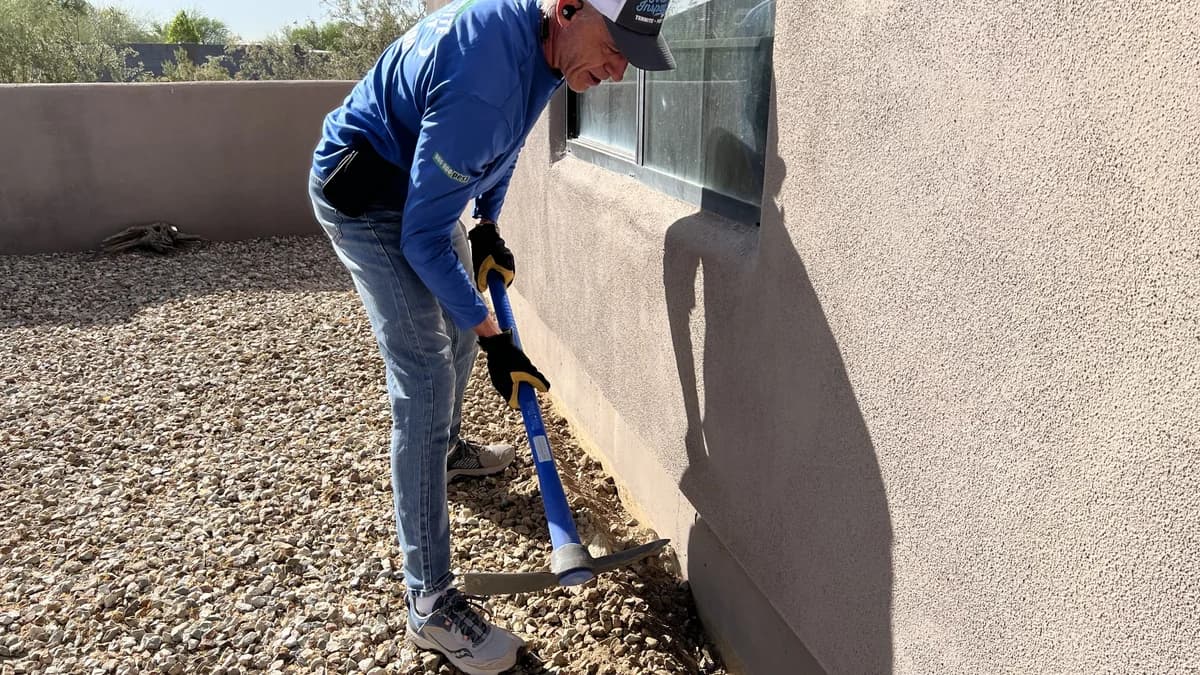
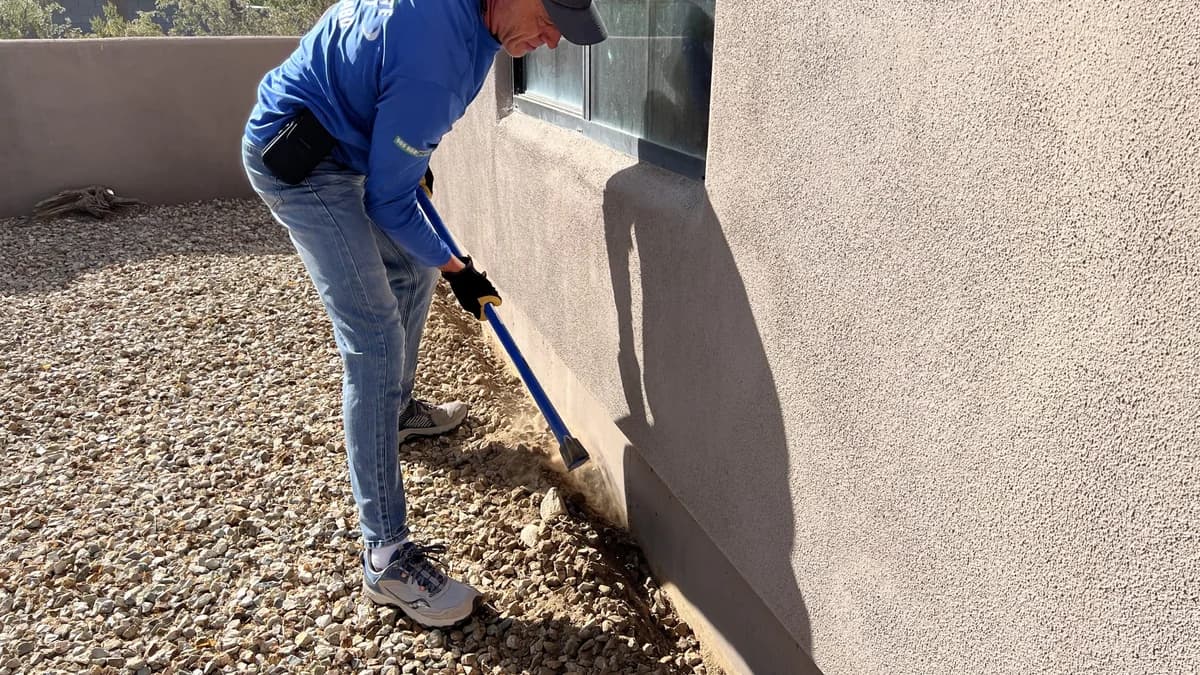
Landscape rock is the difficult one, because it is both the standard Valley landscaping material and excellent scorpion habitat. You do not have to remove it — but rock beds directly against the stem wall deserve treatment attention every visit.
Reduce what they are eating
This is the step most homeowners skip, and it is the one that changes the trend rather than the symptom.
Crickets are the primary food source for bark scorpions in this region. Bring the cricket population down and the property becomes markedly less attractive.
- Switch bright white exterior bulbs for warmer tones, which attract far fewer insects.
- Fix leaking irrigation and hose bibs — most Valley insect pressure follows moisture.
- Keep the garage tidy and sealed; it is usually the cricket reservoir.
What professional treatment adds
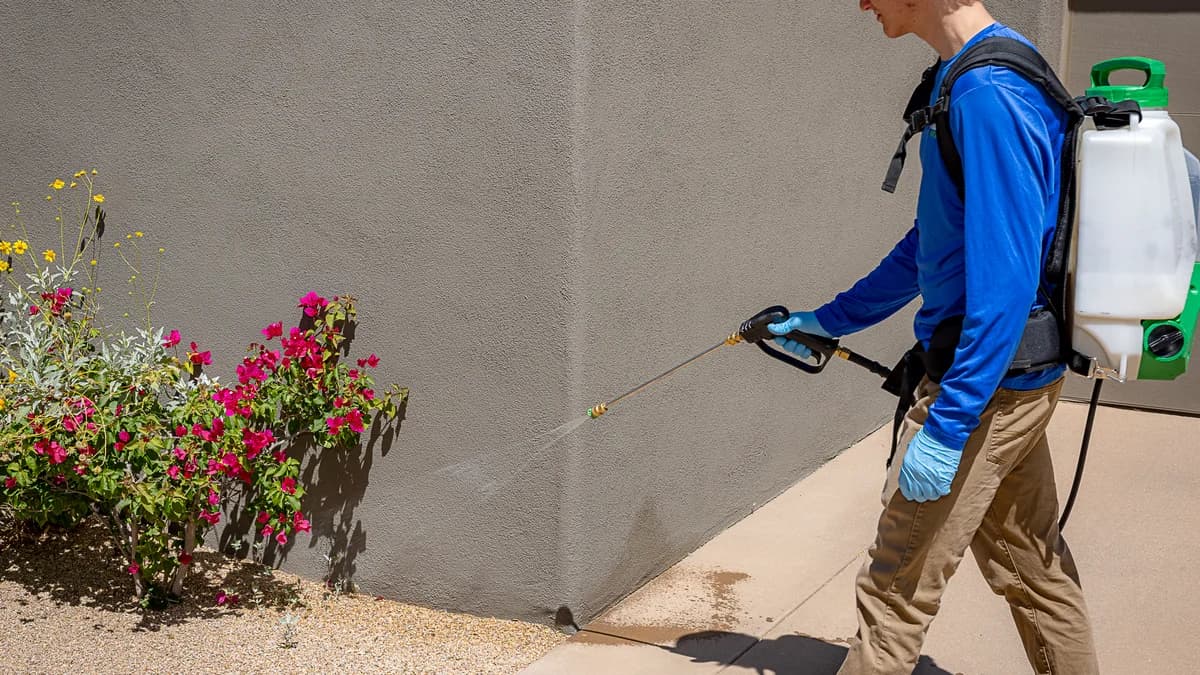
A homeowner can do the sealing and the housekeeping. What professional treatment adds is reach and persistence: dusting inside block-wall voids where scorpions actually shelter, time-release granules across the yard, treatment of the foraging trails along curbing and rock borders, and a treated perimeter that stays active between visits.
Our 4D Barrier Pest Defense System is built around exactly this sequence — four treated zones working from the fence line inward:
- The fence line, sprayed and dusted inside the wall voids.
- The yard between the fence and the house, with granules, bait and treatment of the rock borders insects use as trails.
- The home perimeter — stem wall, doors, garage doors, windows, vent frames and lower eaves.
- The interior, treated at entry points and the interior perimeter, then only semi-annually or annually after that.
The reason the interior needs so little attention after the initial visit is that by then very little is getting that far.
A realistic timeline
Scorpion control is a reduction programme, not a single event. Expect:
- Weeks 1–2: activity may briefly appear to increase as treated scorpions move out of harbourage.
- Weeks 3–6: indoor sightings drop substantially.
- Ongoing: quarterly exterior maintenance keeps the barriers active. Skipping a season in the Valley usually means starting over.
Anyone promising total eradication of scorpions from an Arizona property is overselling. What is achievable, and what our customers actually experience, is going from regular indoor sightings to rare ones.
When to call someone
Call a professional if you are seeing scorpions indoors regularly, if a UV sweep shows a heavy exterior population, or if anyone in the household is at higher risk from a sting — young children, older adults, or pets.
We have treated Valley homes for over 15 years, from Scottsdale and Cave Creek against the preserve to Gold Canyon beneath the Superstitions — the areas where scorpion pressure is heaviest. The inspection and the quote are free, and every service carries a 100% money-back guarantee.
Call (480) 778-1480 or request a free quote and we will tell you honestly what your property needs.