Every year the same thing happens across the Valley. The first serious monsoon storm rolls through, and within a couple of days the calls start.
There is a straightforward reason for it.
Rain floods them out
Arizona bark scorpions spend the day sheltering in exactly the places that fill with water first: ground burrows, block-wall voids, irrigation valve boxes, and the gaps under landscape rock.
A heavy monsoon dump floods all of it at once. The scorpions move to higher, drier ground — and on a typical Valley property, the highest dry ground nearby is the stem wall of the house, the garage, and eventually the inside.
The food supply spikes at the same time
Monsoon rain also produces a flush of insect activity. Crickets in particular breed hard after rain, and crickets are a primary food source for bark scorpions.
So the storm does two things simultaneously: it evicts scorpions from their shelter, and it lays on a much larger dinner service closer to your house. Both point the same direction.
What actually helps
The full approach is covered here, but the monsoon-specific version is short:
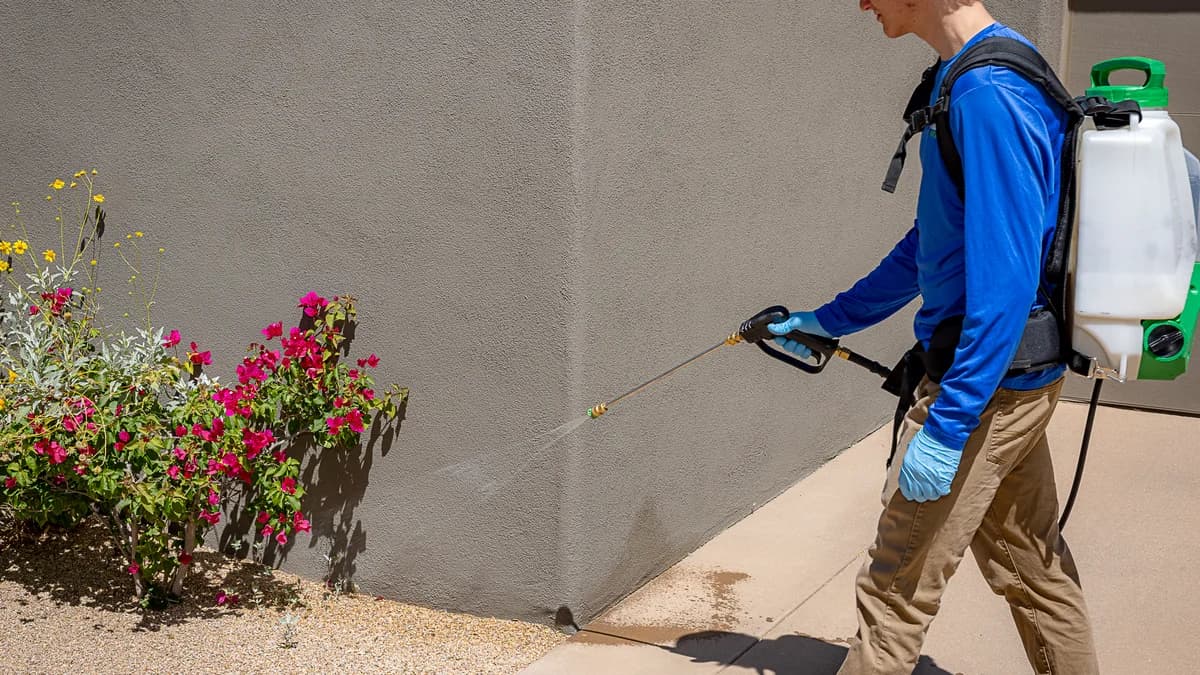
- Get the barrier in place before the storms, not after. A treated perimeter going into July is worth considerably more than a reactive visit in August.
- Walk the property after each storm and tip out standing water — it is breeding mosquitoes as well as feeding crickets.
- Check the door sweeps. Displaced scorpions travel at ground level, and a gap under a garage door is an open invitation.
- Cut the exterior lighting back to warmer bulbs, which draw fewer of the insects that draw the scorpions.
If you are already seeing them
Call (480) 778-1480. We have treated Valley homes through more than 15 monsoon seasons, and we will tell you honestly whether your property needs a full scorpion programme or a barrier top-up.
The inspection and the quote are free.